Digital research data encompasses much more than just raw measurements: it also includes metadata, algorithms, methods, code, and software. The better these resources are structured and accessible, the easier they are to use across disciplines and countries. Three examples from TU Wien show how diverse FAIR practices can be:
All news at TU Wien
Research data – we care to make it FAIR!
Open, well-documented data is a central component of modern research. The FAIR principles ensure that research data is findable, accessible, interoperable and reusable.

© TU Wien
From left: Mariette Vreugdenhil, Katharina Ehrmann, and Felix Iglesias Vázquez

© TU Wien
Mariette Vreugdenhil
Earth observation: Metadata is everything
Mariette Vreugdenhil talks about FAIR-compliant data management in Remote Sensing Research—an area in which large satellite data sets from ESA, NASA, or the Copernicus program are used.
© TU Wien
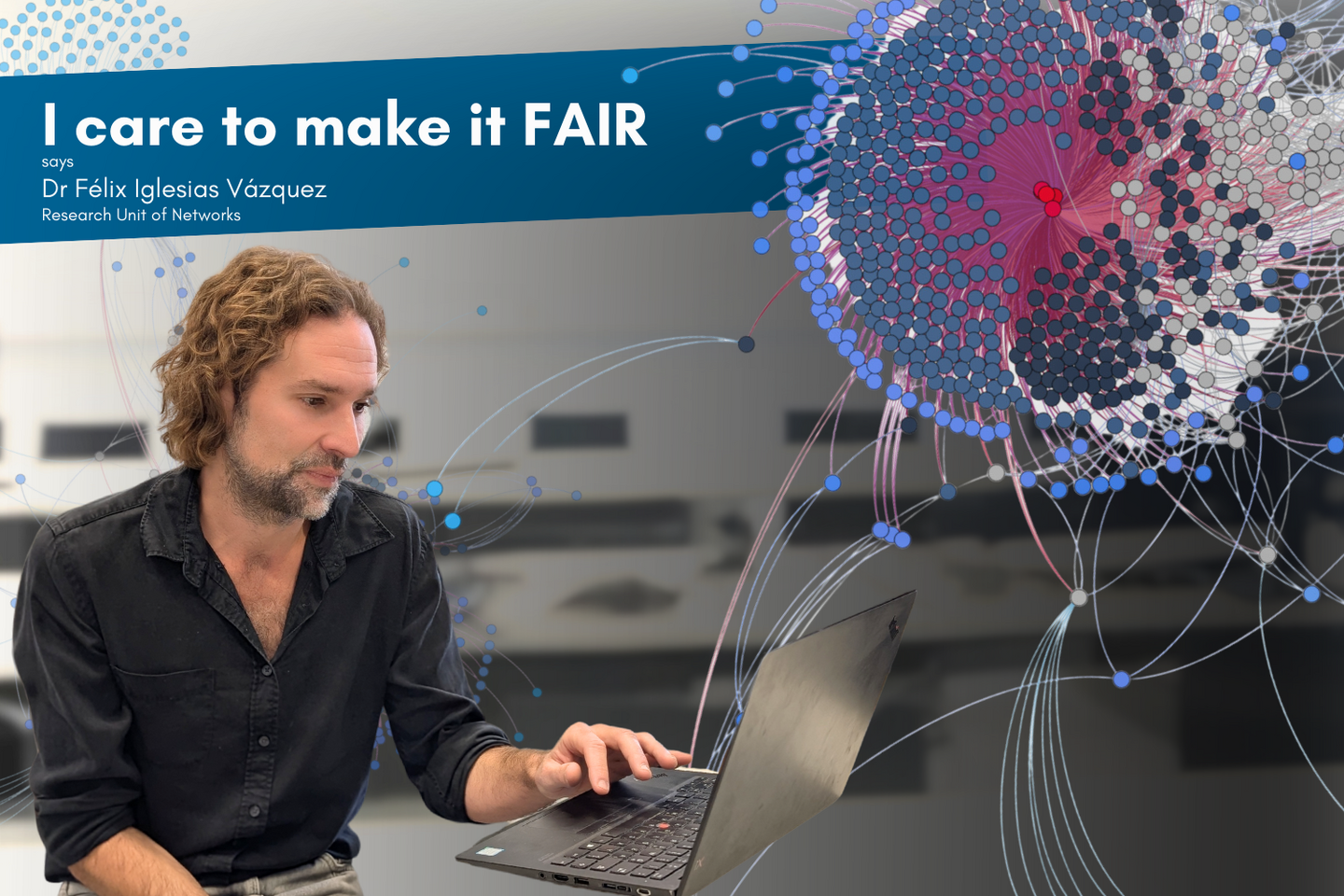
Félix Iglesias Vázquez
Network security: Repeatability through Docker
Félix Iglesias Vázquez analyzes complex data sets for anomalies. To make experiments transparent and reproducible, he relies on storing algorithms and data in Docker containers.

© TU Wien
Katharina Ehrmann
Materials chemistry: Between raw data and intuition
Katharina Ehrmann reports on the challenges of dealing with raw measurement data and meta reviews. In materials chemistry, reviews of raw and meta data are an essential part of the research process – which makes structured access all the more important.
With the TU Wien Research Data, opens an external URL in a new window repository, TU Wien provides a suitable and certified platform for implementing the FAIR principles. Researchers at TU Wien are invited to actively use the repository and contact the Research Data Team if any questions arise.
Further information
Contact: research.data@tuwien.ac.at
Website: https://researchdata.tuwien.ac.at/, opens an external URL in a new window